


 Call +91 9833907060
 Send E-mail
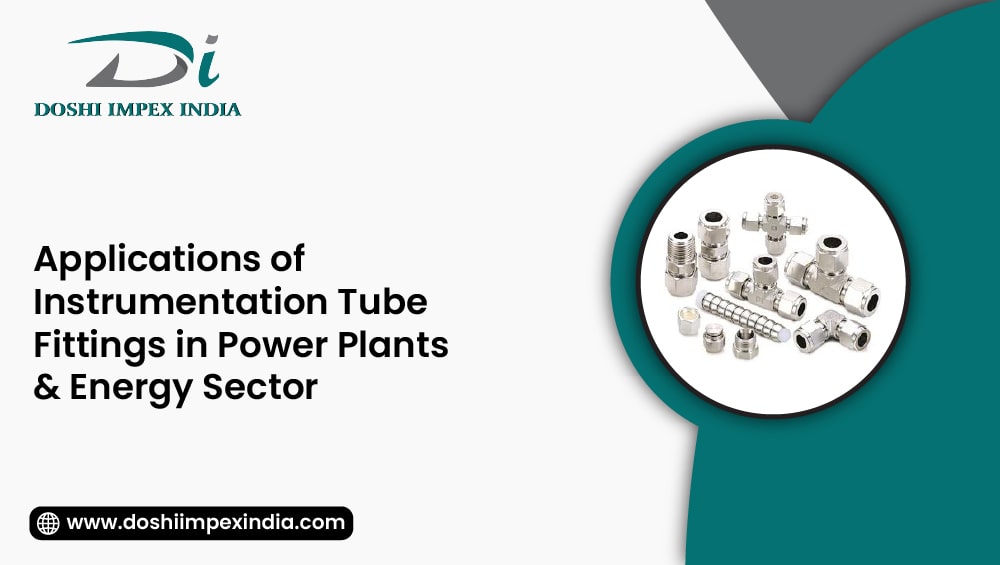
The force and power industry depends heavily on truthfulness, fidelity, and safety. From fossil fuel-grounded capability plants to renewable strength facilities, precise monitoring and control of mechanisms are necessary for ensuring performance and avoiding risks. One of the key components that makes this rightness possible is the instrumentation tube fittings.
These fittings provide leak-proof relationships for tubes that carry fluids and gases used in size, monitoring, and control systems. Whether it is steam generation in a skill plant or a pressure gauge in a drive facility, the performance of tube fittings for capability plants directly marks the complete capability and safety of operations.
In this composition, we will investigate the applications of instrumentation tube fittings in the mining and energy sector, highlight their importance, and discuss why choosing the proper instrumentation fittings supplier is necessary.
What Are Instrumentation Tube Fittings?
Instrumentation tube fittings are correctly produced components used to connect, join, and seal tubes in critical systems. They are widely used in instrumentation, approach control, and size applications. Unlike conventional pipe fittings, these are intentionally created to withstand high pressures, temperature variations, and corrosive environments.
Common types join:
Ferrule tube fittings – Using single or double ferrules to provide leak-tight sealing.
High-pressure tube fittings – Crafted for drastic operating pressures in hydraulic or gas systems.
Compression tube fittings – Offering strong grip and reliable sealing in demanding controls.
These fittings ensure that instrumentation systems in the strength industry remain appropriate, safe, and reliable.
Importance of Tube Fittings in Potency Plants
Qualification plants operate under some of the harshest industrial limitations—high pressure, high temperature, and ongoing operation. A steady minor leak in instrumentation systems can lead to:
Loss of competence in enthusiasm production
- Safety hazards for workers
- Equipment damage and unplanned downtime
- Increased maintenance costs
Tube fittings for qualification plants are created to overcome these challenges. They:
Provide leak-proof connections for evaluation instruments like pressure gauges, flow meters, and transmitters.
Resist corrosion from steam, chemicals, and gases used in qualification generation.
Deal with both low and high pressure requirements, ensuring dependable performance.
Facilitate effortless installation and maintenance for plant engineers.
Applications of Instrumentation Tube Fittings in Force Plants
- Steam Generation Systems
In thermal power plants, steam is generated at very high pressures and temperatures. High-pressure tube fittings are used to connect steam lines to pressure sensors, transmitters, and control systems. These fittings affirm appropriate monitoring of steam pressure and flow without risk of leakage.
- Cooling Water Systems
Cooling systems in nuclear, hydro, and thermal power plants require uninterrupted water flow monitoring. Ferrule tube fittings provide accurate relationships in water treatment lines, ensuring reliable measurements of flow, temperature, and pressure.
- Boiler and Turbine Monitoring
Boilers and turbines are the heart of a thermal plant. Any miscalculation in pressure, temperature, or flow can lead to breakdowns. Instrumentation tube fittings certify that sensors connected to these systems:
- Operate without leaks
- Maintaining streamlining
- Ensure safety.
- Fuel Handling Systems
Whether it’s coal, natural gas, or oil, fuel needs to be carefully monitored during transportation and combustion. Power industry instrumentation fittings are used in pipelines to
- Measure flow rates
- Check pressure
- Ensure temperature
- Make sure there is stability
- Productive vitality
- Control Panels and Instrument Racks
Control rooms in potential plants rely on exact lights from field instruments. Ferrule tube fittings connect tubing to transmitters, gauges, and extra instrumentation devices, ensuring boundary-free signal transmission without leaks or pressure drops.
Applications of Instrumentation Tube Fittings in the Power Sector
Above customary potency plants, the capacity sector spans oil & gas, renewable energy, and petrochemical industries. Here’s how instrumentation tube fittings are used:
Oil & Gas Industry
Used in offshore rigs and refineries for monitoring pressure in gas lines.
High-pressure tube fittings outlaw leaks in intense conditions like subsea drilling.
Renewable Enthusiasm
In solar thermal plants, fittings connect tubing in heat transfer systems.
In wind enthusiasm, hydraulic systems rely on leak-proof fittings to calibrate turbine blade movement.
Nuclear Might Plants
Instrumentation fittings for the power industry ensure safety by carrying correct radiation, temperature, and pressure readings.
Designed to withstand radiation exposure and high temperatures.
LNG and Petrochemical Plants
Used for cryogenic applications where fittings must withstand extremely low temperatures.
Affirm leak-tight performance in environments that are:
- Hazardous
- Flammable
Types of Instrumentation Tube Fittings Commonly Used
- Ferrule Tube Fittings – Double-ferrule fittings are chiefly well-known in ability plants due to their remarkable sealing ability.
- Compression Tube Fittings – Provide strong grip and leak resistance in vibration-prone environments.
- High-Pressure Tube Fittings – Designed for hydraulic systems, steam lines, and gas distribution at high pressures.
- Needle Valve Fittings – Used where flow control is essential in instrumentation systems.
- Curve, Tee, and Cross Fittings – Provide directional differences and branching in tubing networks.
Benefits of Using High-Quality Tube Fittings
The exact choice of tube fittings for force plants and power facilities offers multiple advantages:
Leak-Free Connections: Required for safety and truthfulness.
Corrosion Resistance: Withstands exposure to chemicals, steam, and seawater.
Durability: Long service life under regular harsh conditions.
Smooth Maintenance: Simplifies conference, disassembly, and replacement.
Cost-Productive: Reduces downtime and maintenance costs by preventing failures.
Choosing the True Instrumentation Fittings Supplier
Not every fitting is built fairly. To ensure long-term validity, working with the perfect instrumentation fittings supplier is influential. Here’s what to look for:
- Material Quality: Stainless steel, high-ranking officials, and nickel alloys are commonly used in potential plants for their properties and corrosion resistance.
- Submission: Look for suppliers whose products comply with international standards like ASME, ASTM, and ISO.
- Customisation: The total plant has unique rules. Suppliers should offer custom sizes, pressure ratings, and resources.
- Industry Expertise: A proven track record in supplying fittings to potential and stamina projects adds honesty.
- After-Sales Substitute: Technical backup and spare part accessibility confirm smooth operation.
Future of Instrumentation Tube Fittings in the Force Industry
As the vitality industry shifts towards cleaner and more maintainable ways, the demand for developed instrumentation tube fittings will continue to grow. Some materialising patterns incorporate:
Smart Fittings: Unification with IoT for valid-moment monitoring of leaks and pressure.
Up-to-date Alloys: Utilization of duplex and super duplex stainless steel for enhanced control.
Eco-Helpful Resolutions: Growth of fittings designed for renewable capacity systems.
Miniaturised Fittings: Terse designs to meet the needs of modern instrumentation.
Conclusion
The optimisation and safety of proficiency plants and strength systems rely heavily on rightness instrumentation. At the core of this truth are instrumentation tube fittings, ensuring leak-free links across steam lines, fuel systems, cooling water circuits, and control panels.
From ferrule tube fittings in control systems to high-pressure tube fittings in hydraulic and steam applications, these components are vital for regular production. By choosing a trusted instrumentation fittings supplier, operators can ensure long-term operational performance, minimize downtime, and ensure safety in high-demand environments.
As the drive sector evolves towards endurance and innovation, tube fittings for capacity plants will continue to play a critical role—supporting economy, safety, and rightness in one of the world’s most significant industries.