


 Call +91 9833907060
 Send E-mail
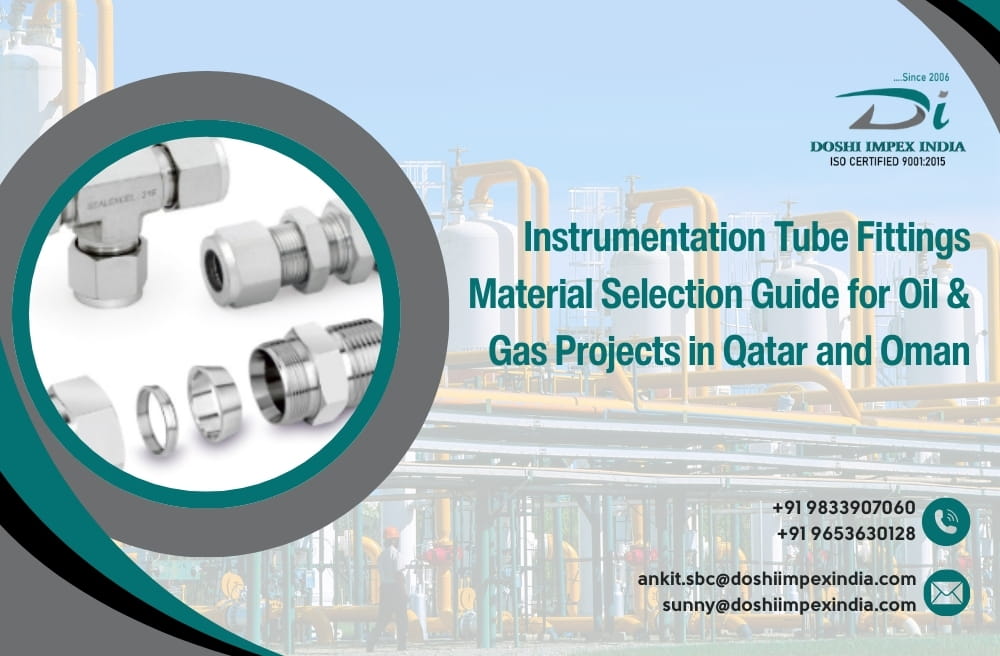
The selection of the best material for fittings on instrumentation tubes is a crucial decision for projects involving oil and gas, and in particular in harsh conditions such as Qatar, as well as Oman. They play a crucial part in maintaining the integrity of systems as well as preventing leaks and guaranteeing the long-term reliability of crucial gas and fluid connections. For procurement and project engineers team members working together with instrumentation tube fittings suppliers in Qatar or instrumentation tube fittings suppliers in Oman, understanding the criteria for selecting materials can dramatically increase the efficiency, safety, and life cycle of a project.
Why Material Selection Matters in Oil & Gas Projects
Gas and oil environments are notoriously rough. The extreme temperatures and corrosive media, high pressure, and abrasive materials place enormous demands on the materials. Instrumentation tube fittings connect transmitters, analyzers,s and valves in control systems for process control. The wrong choice of material could cause corrosion, leaks, as well as downtime and catastrophic failures.
A solid understanding of the properties of materials will ensure:
- Resistance to corrosion against aggressive chemical and salty environments
- Mechanical force under high temperatures and pressure
- Compatible with gas streams, hydraulic fluids, and media
- Longer life of service with lower maintenance costs
Environmental Challenges in Qatar and Oman
The two countries Qatar and Oman are oil and gas ecosystems that are distinguished by:
- Temperatures above ambient temperature: Surface and subsurface operations suffer from prolonged heat exposure.
- Saline conditions: Proximity to the Arabian Gulf introduces chloride-induced corrosion risk.
- Exposure to hydrocarbons: Contact with condensate, natural gas, and process chemicals can cause stress on the material.
- Offshore and Onshore complex: Onshore desert conditions and offshore saltwater environments need materials that can perform in a variety of ways.
The right choice of material for fittings for instrumentation tubes isn’t only about the technical aspects, it’s crucial to comply with international standards (e.g., ASTM, ASME, NACE), security, and efficiency in economics.
Top Materials Used for Instrumentation Tube Fittings
Stainless Steel Alloys
The stainless steels are among the most popular materials for fittings for instrumentation tubes because of their superior durability, corrosion resistance, and pliability.
316/316L Stainless Steel
- Resilience to Corrosion: Very effective against solutions containing chloride and marine atmospherics
- Application: General oil and gas instruments, chemical injection, offshore risers
- The benefits: It is cost-effective and widely accessible from the suppliers of instrumentation tube fittings from Qatar as well as the suppliers of fittings for instrumentation in Oman
- Limited Features: Lower performance in highly acidic environments and at higher temperatures
304 Stainless Steel
- Usage: Less demanding environments, air systems, low-pressure applications
- Capabilities: Lower corrosion resistance as compared to 316/316L
Duplex and Super Duplex Stainless Steel
These alloys offer greater strength and resistance to corrosion, especially against stress cracking during corrosion.
- Duplex 2205
- Increased mechanical strength
- Excellent resistance to crevice corrosion and pitting
- Super Duplex 2507
- Contents of molybdenum and chromium that are higher
- Perfect for offshore, subsea, and aggressive chemical service
Due to their exceptional durability, these fittings are suggested for use in critical situations in arid subsea and offshore environments. These are provided by the suppliers of instrumentation tube fittings from Qatar, along with instrument tube fittings providers from Oman.
Inconel Alloys
Inconel alloys (e.g., Inconel 625, Inconel 825) are nickel-chromium compounds that are famous for:
- Superior resistance to high temperatures and oxidation
- Extraordinary force
- High tolerance to gas environments that are sour (H2S)
Ideal for high-temperature process streams and offshore high-pressure.
Monel Alloys
Monel (e.g., Monel 400) provides:
- Superior resistance to corrosion by seawater
- High Tensile Strength
- Good performance in the presence of sour gas
Most often used offshore, Monel alloys are preferred for use when hydrogen attacks and chloride embrittlement are a concern.
Carbon Steel and Alloy Steel
While not the best choice for corrosion-prone environments Carbon and alloy steels can be found in the following ways:
- Additional coatings for protection are added to protect the system.
- Low-risk fluid lines
- environments where high nickel alloys are cost-prohibitive.
They are typically recommended with barriers to protect (e.g., the plating, cladding) and strict monitoring.
Key Material Selection Factors
When choosing the fittings for instrumentation materials for projects involving oil and gas, take into consideration the following factors:
Corrosion Resistance
Corrosion poses the biggest risk to performance over the long term. Evaluate:
- Susceptibility to cracking in the stress corrosion caused by chloride
- Resistance to corrosion of crevices and pitting
- Hydrogen sulfide and sour-service tolerance
Duplex, as well as Super Duplex stainless steels and nickel alloys, are favored in areas of high risk for corrosion.
Temperature and Pressure Ratings
Temperatures that are higher can reduce the strength of materials and alter the mechanical properties. Be sure the material you select has structural integrity under specifications.
Compatibility
Material should be compatible not only with the medium but also with adjacent pipes, instruments, valves, and other equipment. Incompatible materials can lead to galvanic corrosion.
Regulatory and Industry Standards
For gas and oil, conformance with standards like ASME B31.3 (Process Piping), NACE MR0175/ISO 15156 (sour service), and API specifications is crucial.
Supplier Reliability
Selecting reputable suppliers of fittings for instrumentation from Qatar, along with fittings for instrumentation providers in Oman, assures traceability, accreditation, and quality control of the material.
Working with the Instrumentation Tube Fittings Suppliers in Qatar and Instrumentation Tube Fittings Suppliers in Oman
To ensure the right material selection, working with reliable suppliers is crucial. Suppliers from Qatar, as well as Oma,n with experience and track records will help guarantee:
- Testing and certification of materials (NDT PMI, NDT)
- Traceable documentation
- The project’s specifications are in line with the requirements.
- Assistance with the purchase and the installation phase
Trusted instrumentation fitting providers stock an array of materials ranging from 316 stainless steel standard to super-performance Super Duplex and nickel alloys that can meet any project need.
The right choice of material for tube fittings used in instrumentation for oil and gas projects can have a significant impact on the safety, availability, and project cost,s particularly in harsh environments such as Qatar, as well as Oman. Duplex alloys, stainless steels, as well as nickel alloys and Monel offer a variety of options based on the severity of corrosion as well as temperature, pressure, and the composition of the media.
Teams of procurement and engineers should cooperate closely with reputable Instrumentation Tube Fittings suppliers in Qatar, along with instrumentation tube fittings suppliers in Oman, to determine the most effective solutions for materials, ensure that they are in line with international standards, and ensure long-term stability.
- What are the best materials to use for fittings on instrumentation tubes for Qatar for oil or gas development?
In the harsh desert and marine conditions, stainless steel 316/316L, Duplex 2205, Super Duplex 2507, as well as Inconel alloys, are recommended due to their resistance to corrosion and durability. Doshi Impex India provides certified materials to satisfy these specifications.
- Why should you select Super Duplex stainless steel for fittings for instrumentation tubes within Oman?
Super Duplex offers superior strength and corrosion resistance in environments with chloride-like Oman’s coastline regions. It’s perfect for offshore and high-pressure use. Make contact with Doshi Impex India to source high-quality Super Duplex fittings.
- How can I make sure that the tube fittings manufacturer in Qatar complies with the project’s standards?
Select suppliers that have ASME, NACE, and ISO certifications with traceable quality documents, as well as extensive testing of materials. Doshi Impex India partners with certified suppliers to ensure compliance with the materials.
- Are there any ways that Doshi Impex India supplies instrumentation tube fittings that are suitable for high-temperature applications?
Doshi Impex India offers materials such as Inconel 625 and 825 that are resistant to high temperatures and harsh environments, which makes them ideal for demanding pipelines for gas and oil.
- What should I think about when choosing instrumentation tube fittings in Oman?
Take into consideration corrosion resistance, temperature, and pressure ratings, as well as compatibility with piping systems and the reliability of the supplier. Choose reputable manufacturers of fittings for instrumentation in Oman, such as Doshi Impex India to ensure the highest quality and assurance.