


 Call +91 9833907060
 Send E-mail
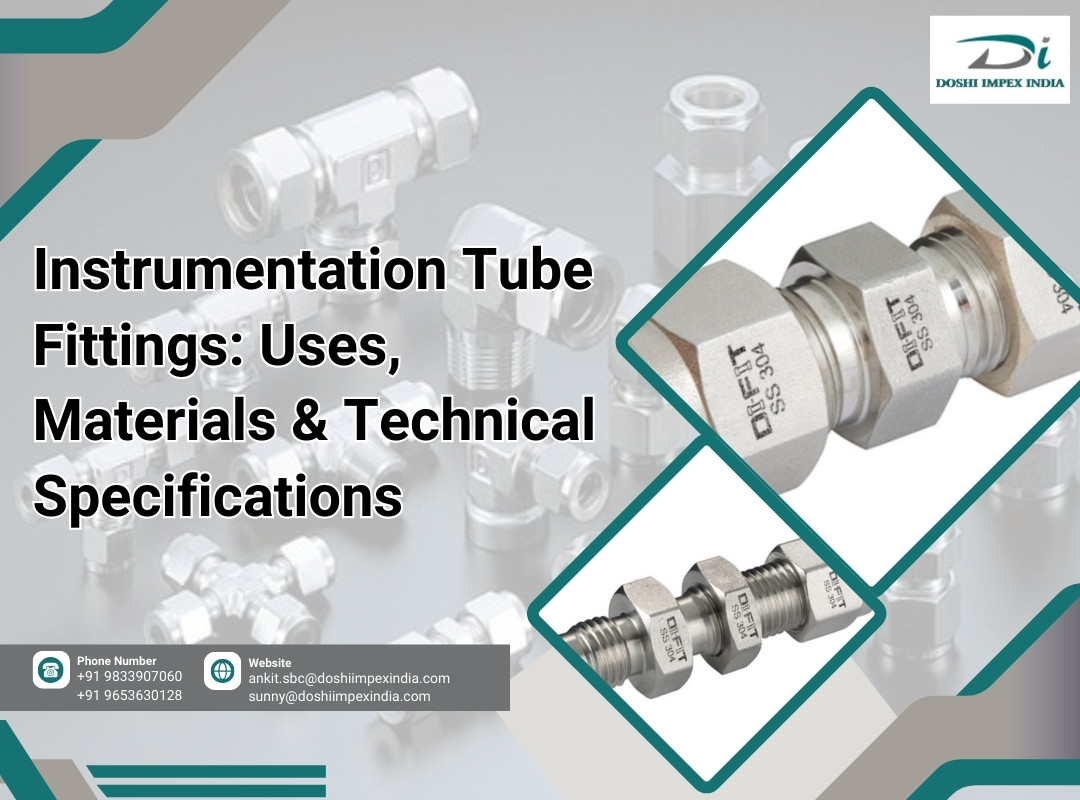
These days, in the modern industrial systems, precision, safety, and leak-free performance are elements that are a must and are non-negotiable. It is for this purpose that instrumentation tube fittings play a major role.
Typically, they are widely used across oil & gas, chemical processing, power generation, and pharmaceuticals. In function, these fittings ensure secure connections for tubing systems. Specifically, those handling high pressure, temperature, and corrosive media.
Hence, we at Doshi Impex India, a leading manufacturer of instrumentation tube fittings in India, present this blog explaining all essential facts about instrumentation tube fittings, their uses, materials, and technical specifications that specifically engineers, procurement managers, and plant operators need to know about so that they can make informed decisions.
What are Instrumentation Tube Fittings?
Instrumentation tube fittings comprise mechanical connectors that connect, control, and direct tubing within instruments and control systems for process control. Contrary to conventional pipe fittings, tube fittings are specifically designed to meet precision dimensions, tolerances, and provide resistance to vibration, low leakage, and a long life of service.
They are typically used in conjunction with stainless steel tubing, copper tubing, and alloy tubing for applications in which precise gas or fluid measurement is crucial.
The use of instrumentation tube fittings in a variety of industries
1. Oil & Gas Industry
Instrumentation fittings are utilized in:
- Wellhead control panels
- Offshore platforms
- The refineries, as well as the gas processing facilities
They aid in managing extreme pressures, as well as corrosive gases and extreme temperature fluctuations, while making sure that the system is reliable.
2. Chemical & Petrochemical Plants
Chemical plants depend on fittings for instrumentation that are resistant to corrosion for the safe transportation of chemicals. Leak-proof performance is crucial to reduce the risk of accidents and delays.
3. Power Generation
In nuclear, thermal, and renewable power stations, tube fittings are used to support:
- Steam lines
- Hydraulic control systems
- Cooling circuits
The precise fittings guarantee the highest level of accuracy in monitoring and operational safety.
4. Pharmaceutical & Food Processing
The industries that they serve require instruments with hygienic fittings that comply with standards for cleanliness. The smooth surfaces of the internal surfaces help ensure that there is no contamination and permit easy cleaning.
5. Process Automation and Instrument Panels
Tube fittings for instrumentation are extensively used in:
- Pressure transmitters
- Flow meters
- Sensors for temperature
- The control panel and the skids
Their small size allows them to be used in tight installations.
Different types of instrumentation tube fittings
Knowing the right type of fitting can assist in choosing the most appropriate solution
- Compression Tube Fittings are the most commonly used to provide leak-proof seals with no welding
- Union fittings allow for easy disconnect and maintenance
- Elbow & Tee Fittings are used for changing directions and branching
- Fittings for Bulkheads – Allow tubing to be able to pass through panels
- Male and female Connectors – Connect tubing to threaded ports
Each model is built to meet specific temperatures, pressures, and installation needs.
Materials utilized in instrumentation: Tube Fittings
Selection of the right material is vital for safety and durability. The most popular materials are:
Fittings for Instrumentation Tubes in Stainless Steel
- Grades: SS 304, SS 304L, SS 316, SS 316L
- Excellent corrosion resistance
- Temperature tolerance and high pressure
- It is widely used in the oil and gas as well as chemical industries.
Carbon Steel Tube Fittings
- Cost-effective solution for environments that are not corrosive
- Appropriate for moderate pressure applications
Alloy Steel & Special Alloys
- Inconel, Monel, Hastelloy
- Useful in extreme environments that have extreme temperatures andan aggressive medium
Brass Instrumentation Fittings
- In low-pressure pneumatic as well as hydraulic systems.
- Common instruments panels
The right choice of material can increase system longevity and lower the cost of maintenance.
Technical Specifications for Instrumentation Tube Fittings
When choosing fittings for tubes, knowing the technical specifications is vital.
Tube Size Range
- Typically, it ranges from 1/8 from 1/8 inch
- Available in imperial and metric sizes.
Pressure Ratings
- Created to be able to withstand extreme pressures determined by the material used and the size
- Fittings made of stainless steel can withstand pressures that exceed 6000 PSI.
Temperature Variable
- Ideal for temperatures ranging from -50 °C up to +400 °C according to the materials
End Connections
- Double ferrule compression design
- Single ferrule option
- Threaded ends (NPT BSP, BSPT)
Standards & Compliance
Instrumentation tube fittings of the highest quality comply with:
- ASTM standards
- ASME specifications
- ISO quality standards
Compliance assures safety, efficiency, and worldwide compatibility.
Benefits of using high-quality instruments: Tube Fittings
- Leak-proof performance
- Vibration resistance
- Installation is simple and does not require welding
- Reducing time to downtime as well as maintenance
- Long operational life
Investing in precision-manufactured fittings significantly improves system efficiency and safety.
What is the best way to choose the right Instrumentation Tube Fittings?
When deciding on fittings, think about:
- Operating temperature and pressure
- Gas or fluid compatibility
- Conditions in the environment
- Standards and certifications for the industry
- Installation and maintenance are simple.
When you work with a reputable instrumentation fittings manufacturer will ensure you receive fittings that meet the safety and technical requirements.
The importance of fittings for instrumentation tubes in the modern Industry
As businesses move towards automation and greater effectiveness, instrumentation tube fittings remain a crucial element. Their capacity to ensure solid leak-free connections directly affects the safety of operations, accuracy, and conformity.
If it’s a refinery, pharmaceutical plant, or power station, choosing the appropriate tube fittings will ensure continuous efficiency and cost savings over the long term.
Instrumentation tube fittings can be small parts, but their impact can be significant. When they are aware of their use, the materials they are made of, and specifications, engineers and decision makers can design safer, effective systems.
For industries that need quality and precision, high-end fittings for instrumentation tubes aren’t an option but a requirement.
So, if you are looking to get Premium Quality instrumentation tube fittings at an affordable instrumentation tube fittings Price in India, then you need to ‘Get in Touch’ with us at Doshi Impex India.