


 Call +91 9833907060
 Send E-mail
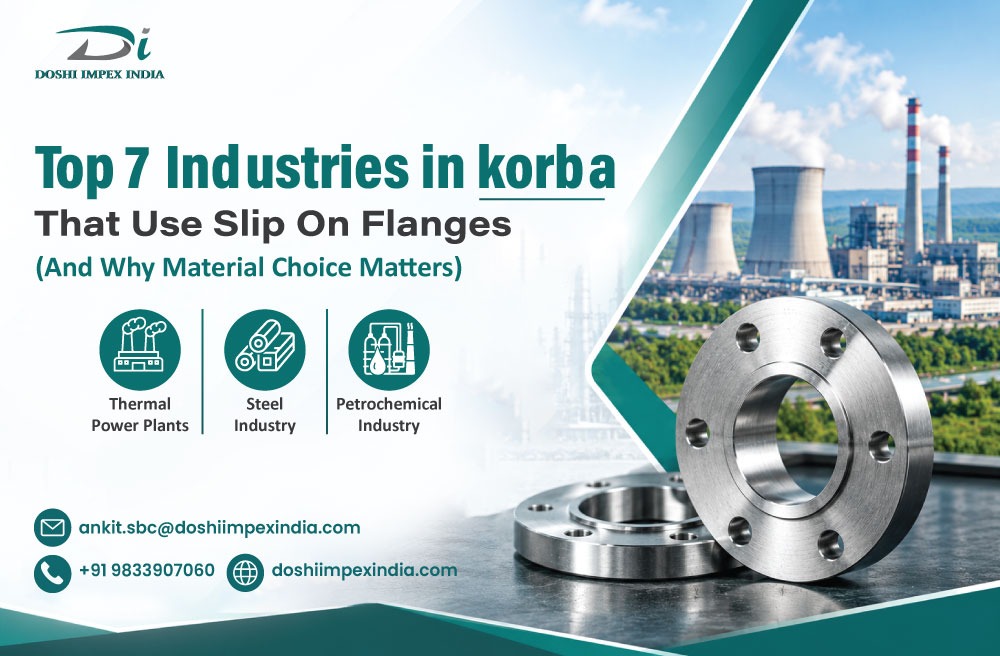
Korba is among India’s major industrial hubs and is renowned for its power generation and coal mines, engineering, metals, and processing industries. In the harsh operating environments that require extreme temperatures, pressure, as well as corrosive fluids like water, steam, and slurry, reliable pipe connections are vital. Slip-on Flanges are commonly employed in these systems since they provide a convenient and affordable method of connecting pipes, pumps, valves, along with other machinery.
If you are a business looking for the Slip-on Flange Korba, choosing the appropriate material is as crucial as selecting the proper dimensions and class of pressure. A flange which isn’t suitable for the working environment could be subject to corrosion, leakage, deformation, or premature failure.
Industrial buyers seeking a Flange that is Slip-on Flange Korba Supplier in India and a slip-on Flange Korba Supplier in India: Understanding the locations where these flanges are utilized and the way that material selection impacts the performance of these flanges can assist in making better decisions about purchasing.
What Is a Slip-On Flange?
A slip-on is one of the pipe flanges that are made to slide over the outer diameter of pipes. It is typically set around the pipe and is welded from both the outside and inside to form a secure bond.
In comparison to other flange styles, they are simple to install and may be cost-effective for various applications. They are typically available in a variety of sizes, pressure ratings, and materials.
The selection of the material is based on factors like temperature, pressure, fluid properties, corrosion exposure, mechanical loads, and the applicable standards.
Why Are Slip-On Flanges Used in Korba Industries?
The reason is their flexibility. Korba’s industrial system comprises power plants, coal mines, water-treatment facilities, metal processing facilities, as well as engineering operations. They require large pipe systems for the transportation of fuels, water, steam, chemicals, gas, slurries, as well as other fluids used in the process.
A flange that is properly chosen for slip-on will provide a reliable bolted connection that allows components to be assembled, examined, and maintained or repaired more quickly.
Let’s take a look at the seven industries that are the top in Korba which use slip-on Flanges.
1. Power Generation Industry
Power generation is among the largest industrial fields in Korba. Thermal power plants feature extensive pipes that transport water for cooling, steam condensate, boiler feedwater, and various process fluids.
Flanges with slip-on connections can be utilized in low- or moderate-pressure piping and utility systems in accordance with engineering specifications of engineering.
The importance of material choice
Power plants can be subjected to extreme temperatures and pressure variations, as well as vibrations and demanding operating conditions. Carbon steel is a good choice for a variety of conventional uses; however, alloy steels and stainless steels are a possibility for applications where a higher temperature or resistance to corrosion is required.
The material used for flanges should be in line with the pipeline, its service conditions, as well as the relevant design standards.
2. Coal Mining Industry
Korba lies within substantial mining activities for coal. Mining operations make use of large piping systems for water supply and dewatering, slurry management, compressed air, and various other services.
The importance of material choice
Mining environments expose the components to particles, abrasive impacts, moisture, and corrosive environments. Therefore, when selecting a flange, it is important to be based on the strength of the flange, its mechanical strength and corrosion resistance, as well as particulars of the transport medium.
In the case of abrasive slurry applications, materials and the piping system design need special attention since the performance of flanges cannot be assessed without regard to the overall pipe arrangement.
3. Steel and Metal Processing
Metal-processing and related operations depend on piping systems to cool water, steam, compressed gases, hydraulic services, and different process fluids.
The importance of material choice
Metal plants expose pipe components to extreme temperatures, humidity, scale, chemicals, and thermal cycling. Steel grades made of stainless steel can offer greater resistance to corrosion in the right conditions, while carbon steel may be an ideal option for a wide range of general-purpose products.
The right grade selection can extend the life of your service and cut down on maintenance.
4. Chemical and Process Industries
Process and chemical facilities employ pipe systems for transporting acids, alkalis, solvents, gases, water, and other media for processing.
Why is material choice important?
This is when material compatibility is crucial. A flange that works well with water might not be appropriate for an aggressive chemical fluid.
Based on the composition of the chemical, as well as the concentration, temperature and pressure depending on the chemical composition, concentration, temperature, and pressure, stainless steel, duplex nickel alloys, stainless steel, and other specialized materials with specialization can be categorized.
5. Water Treatment and Utilities
Industrial water treatment facilities require pipes that carry raw and treated water, wastewater filters, pumps, as well as chemical-dosing systems.
The importance of material choice
The quality of water varies greatly. Chlorides, dissolved oxygen, chemicals, and other wastewater contaminants may be a factor in corrosion.
The right flange material will help to reduce corrosion-related issues and help ensure a solid operation. The choice of material must be based on the actual water chemistry and conditions instead of simply selecting the most affordable choice.
6. Cement and Construction Material Industry
Cement manufacturing facilities, as well as other similar facilities, make use of utilities and piping systems for compressed air, water chilling systems, processing services, and many other uses.
The importance of material choice
Heat, dust, vibration, and the harsh environment can impact pipe components. Flanges must have sufficient mechanical strength and resistance to corrosion to ensure their use.
Alongside the material, the correct alignment, welding, gasket selection, bolting, and installation techniques are crucial to maintain connections that are leak-free.
7. General Engineering and Industrial Manufacturing
Korba’s wider engineering ecosystem comprises workshops, equipment makers, fabrication firms, maintenance contractors, and industrial service suppliers. The companies may utilize Flanges on pipelines, pumps, tanks, pressure systems, and other fabricated equipment.
The importance of material choice
Engineering applications are diverse. A project might need carbon steel, and another could call for stainless steel or a more powerful alloy.
Understanding the operating temperatures, pressures, corrosion exposure, and other mechanical needs helps engineers select appropriate flange materials instead of solely relying on the price.
How to Choose the Right Slip-On Flange Material?
The 5 W’s as well as the 1 H offer a helpful framework to help you choose a flange:
What is the object you are transporting?
Find out if the system contains water or gas, chemicals, steam, oil, slurry, or another type of medium.
Who will decide who is to specify and where to place the flange?
Highly qualified engineers, Fabricators, procurement teams, and installation experts must be able to work with the relevant plans, standards, and specifications.
Where will the flange be able to operate?
Think about whether the item is going to be exposed to mining conditions or high temperatures, water or outdoor environments, chemicals or other conditions that are challenging.
What time does the flange start to work?
Continuous operations, frequent stop-start cycles, frequent thermal cycles, and maintenance schedules can affect the design and material requirements.
Why does material selection matter?
The wrong material could cause leakage, corrosion, maintenance time, and repair costs.
How do I select the appropriate material? chosen?
Examine temperature and pressure, fluid compatibility, mechanical loads, corrosion requirements, dimensions, pressure classes, and applicable specifications for welding and the total lifecycle cost.
Why Choose Doshi Impex India?
When looking for a Slip-on Flange Korba, industrial buyers must look beyond the price. Quality of the product, material traceability, the accuracy of dimensional measurements, manufacturing capabilities, documentation, and reliability are all vital.
Doshi Impex India is a great option for industrial customers looking for solid flange solutions throughout India. When looking at a Flange Slip-on Flange Korba Supplier from India and the Slip-on Flange Korba Supplier in India, buyers must be able to clearly explain the needed dimensions of the flange, material grade, pressure class, pipe specification, the quantity, and operating requirements.
Power, mining, chemical, metal, water-treatment, cement, and engineering industries all rely on the strength of pipe infrastructure. Slip-on Flanges offer a convenient connector for many different applications.
However, the performance of flanges is contingent greatly on the selection of the right material for the application. Stainless steel, carbon steel, alloy steel, and many other types of materials possess different performance characteristics.
For those looking for a slip-on flange Korba, the best method is to look at the entire application, not just the cost of the flange. Partnering with a seasoned slip-on flange manufacturer in India, as well as the slip-on flange Korba Supplier in India like Doshi Impex India, will aid industrial buyers in finding products that are compatible with their technological needs.
1. What can a slip-on flange be used to do?
A slip-on flange is a flange that is employed to establish an unbolted connection between pipes and other equipment such as pumps, valves, and piping components. It is typically utilized in industrial piping applications and utilities.
2. How do I select a slip-on flange?
Select the appropriate material in accordance with the flow of fluid, operating temperature and pressure, the corrosion environment, mechanical requirements, pipe material, and the applicable engineering standards.
3. What industries within Korba make use of slip-on Flanges?
The most important users include coal mining, power generation, metal processing, steel, chemical and process industries, cement manufacturing, water treatment, along with general engineering.
4. What makes material compatibility essential for flanges?
Material compatibility is a way to prevent excessive degradation, corrosion, leakage, and premature failure. The flange must be appropriate for the fluid used and operating conditions.
5. Where can I purchase a Slip of Flange from an Indian supplier?
Industrial buyers can contact Doshi Impex India for flange needs and supply details such as size, material grade, normal quantity, and application information to determine the right product.