


 Call +91 9833907060
 Send E-mail
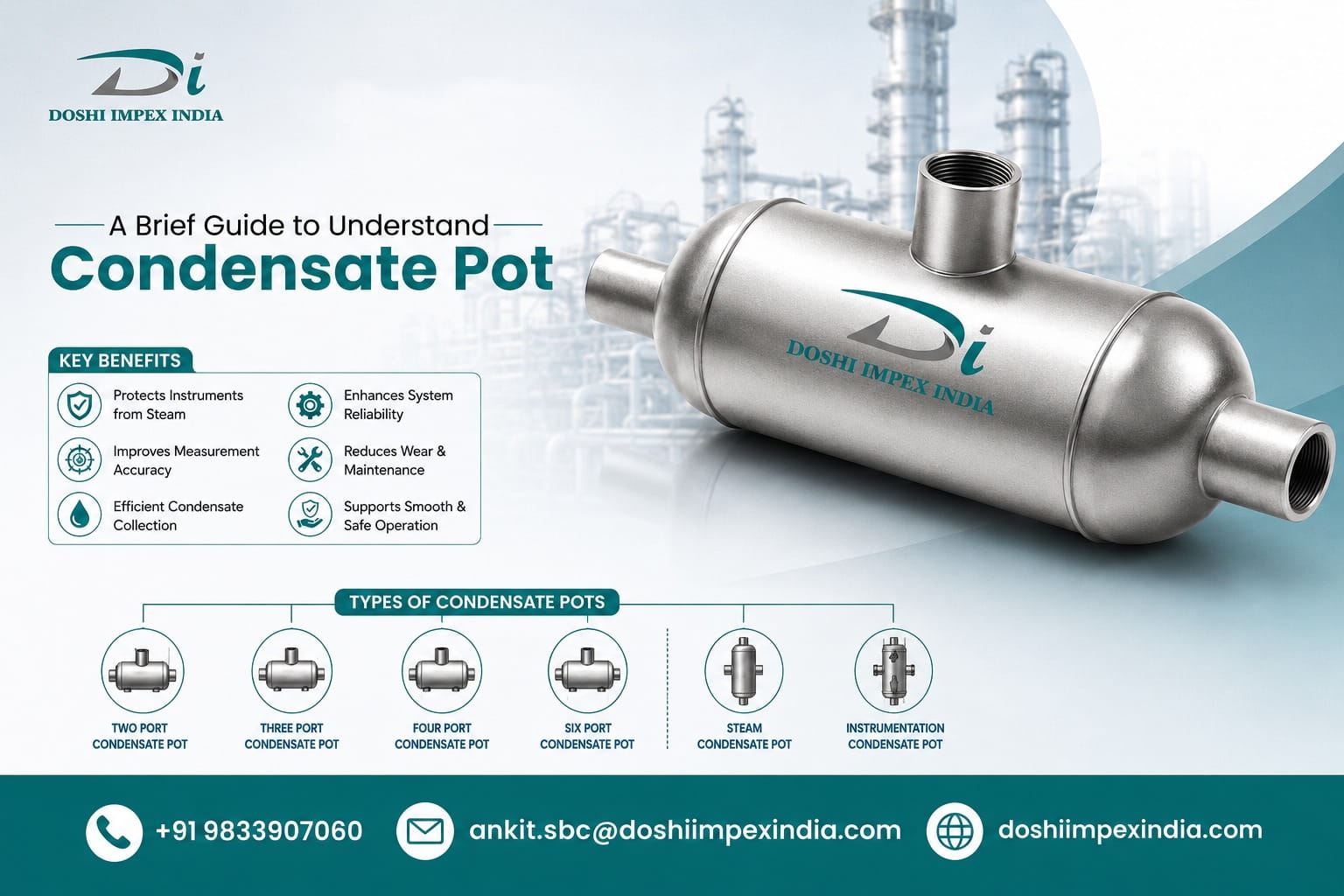
In industrial systems that rely on steam, efficient condensate control is vital to ensure accurate measurement, safeguard instrumentation, and enhance overall process reliability. A condensate kettle is a key element in differential pressure and steam measurement systems that manage condensed steam as well as maintain the stability of the liquid column.
Industries like energy generation and power, petroleum chemicals, pharmaceuticals, chemical processing, manufacturing plants, and refineries utilize condensate containers in many instruments. Knowing the condensate pot‘s working principles, the construction process, as well as applications can help businesses choose the best solution to meet their requirements for steam measurement.
What Is a Condensate Pot?
Condensate pots are specific instrument parts that are placed to provide steam, usually between a steam line and a differential pressure device like a differential pressure transmitter or gauge.
When steam flows through impulse lines, it eventually is cooled and then condenses. The condensed water may cause an unstable measurement situation if it is not handled appropriately. Condensate pots help to keep the condensate level at a constant level, thereby providing a steady pressure reference to the instrument.
The steam condensate kettle is, therefore, particularly crucial in situations where accurate differential pressure measurement is required.
Condensate containers are generally made from various materials, including carbon steel, stainless steel, and alloy steel, as well as other materials selected based on process temperature, pressure, and compatibility.
Condensate Pot Working Principle:
The condensate-pot operating concept is based upon maintaining an even and controlled condensate column in the impulse pipe that is linked to an instrument for measuring steam.
In a typical steam process, steam is introduced into the process line and moves to an area of measurement. Since the impulse lines are subjected to lower temperatures than the process steam, a portion of the steam condenses into water.
The condensate container collects the liquid, which helps maintain a steady condensate level within those impulse lines. This results in an unchanging hydrostatic head that is on the opposite side of the measuring system for differential pressure.
For instance, when measuring steam flow with an orifice plate as well as a differential pressure transmitter, the equal condensate levels within the impulse lines can help avoid measurement errors that are caused by variations in temperature and condensate levels.
The operating sequence that is the basis of everything can be described as follows:
- Steam flows through the pipeline.
- A small amount of steam condenses inside the lines that are impulsive.
- Condensate builds up inside the condensate pot.
- The pot has a steady liquid level.
- The liquid column gives an unambiguous reference pressure.
- The differential pressure instrument gets more stable pressure signals.
This setup improves the accuracy of measurements and decreases the risk of readings fluctuating.
Why Is a Steam Condensate Pot Important?
Steam systems work at high temperature and pressure. Exposing the instrumentation device to high-temperature steam could impact its performance and longevity.
Condensate pots help create a controlled connection between the steam process and instrumentation. The condensate collected creates a liquid barrier which can minimize the direct contact of an instrument with high-temperature steam.
It also ensures that both lines of impulse contain an identical liquid column. This is especially important in differential pressure measurements because variations in the levels of condensate could result in an additional hydrostatic pressure, which can affect the precision of measurements.
Thus, a well-chosen and properly installed steam condensate vessel that is properly installed can help:
- Stable differential pressure measurement
- Protection of instruments is improved
- Reduction of temperature-related measurement issues
- Consistent impulse-line conditions
- More reliable steam measurement systems
- More durable service life for connected instruments
Condensate Pot Use in Industrial Applications
The condensate kettle’s use is widespread across a variety of industries in which steam measurement and measurement instruments are crucial.
1. Steam Flow Measurement
A very popular application is measuring the flow of steam. Condensate containers are utilized together with differential pressure transmitters and flow measurement systems to offer an accurate reference.
2. Boiler and Power Plants
Boiler systems, thermal power plants, and utility systems typically make use of steam with high pressures and temperatures. Condensate pots are a possibility to integrate into instruments for accurate measurement of flow and pressure.
3. Chemical and Petrochemical Industries
Chemical and petrochemical plants make use of steam for heating, processing, and utility processes. Condensate pots are a great way to ensure the reliability of instruments in these harsh conditions.
4. Refineries and Oil & Gas Plants
Steam is extensively used for heating, stripping, and other processes in refineries and the oil and gas industry. Condensate pots are typically used in differential pressure measurement systems in conjunction with steam services.
5. Pharmaceutical and Manufacturing Plants
Steam is utilized for heating sterilization, heating, as well as other processes in the industrial sector. Condensate management is essential to aid in the accurate use of instruments and control of processes.
Key Factors to Consider When Selecting a Condensate Pot
The selection of the best condensate container is a matter of weighing several technical considerations. The most important is the operating temperature and pressure of the device. The construction material must also be suitable for the medium used for the process and the environmental conditions.
Other crucial factors to be considered are:
- Size of the connection to the process
- Instrument connection size
- Construction materials
- Operating pressure
- Operating temperature
- Required volume
- Connection configuration
- Industry standards applicable to the industry
- Installation orientation
- Compatible with impulse piping
The correct size is crucial since the condensate container should provide adequate condensate retention and steady operating conditions for the instrumentation device.
Why Choose a Reliable Condensate Pot Manufacturer in India?
Partnering with a Leading Condensate pot manufacturer in India will allow industries to get products that are designed to meet the specific requirements of their processes. A reliable company should be able to offer suitable materials, connection measurements, pressure ratings, and options for customization.
Doshi Impex India focuses on providing industrial instruments and process components specifically designed for the most demanding of applications. For steam measurement, selecting condensate containers that are compatible with the specific conditions of the process is vital to ensure reliable performance.
Before purchasing, the customer should give relevant information about the application, including operating temperature, pressure, medium, requirements for connection, and specifications for the instrument. This allows the supplier or manufacturer to suggest an appropriate configuration.
A condensate jar may seem like an uncomplicated component; however, it plays a crucial function within steam-based instrumentation. Through the collection of condensate and aiding in maintaining a steady fluid column, it allows the accuracy of differential pressure measurement, as well as reducing the direct effect of high-temperature steam on the connected instruments.
Knowing the condensate pot’s working principles and condensate pot usage is essential for instrumentation professionals, engineers, and plant operators with steam systems.
For industrial applications that are reliable, selecting the best steam condensate kettle depending on temperature, pressure, material size, dimensions, and connection requirements can be a significant contributor to the stability of measurement and performance of the system. Doshi Impex India can be thought of as a condensate pot that is suitable for solutions that are based on specific industrial needs.
1. What’s a condensate jar?
Condensate pots are an instrumentation device used for steam measuring systems that collect and store condensate from impulse lines. It assists in creating a stable liquid column for measuring differential pressure and protects instruments from exposure directly to steam at high temperatures.
2. What is the condensate-pot’s working principle?
The condensate pot’s principle of operation is to collect steam condensate while maintaining an almost constant liquid level within these impulse lines. This provides a reliable hydrostatic reference for the use of differential pressure instruments in steam measurement.
3. What is the primary condensate pot’s use?
The main condensate-pot usage is for steam flow and pressure measurement systems. It is typically used in conjunction with differential pressure transmitters and other instruments in which the condensate level is stable for precise measurement.
4. Where can a steam condensate kettle be employed?
The steam condensate vessel is utilized in refineries, power plants, and petrochemical facilities. It is also used in manufacturing industries, chemical plants, boiler systems, and other industrial facilities in which steam measurement and process measurement are required.
5. What should I look for in a condensate maker in India?
When choosing a condensate pot maker in India, take into consideration the quality of the product and material selection, the capability to handle temperature and pressure, dimensional accuracy, as well as the possibility of customization, experience in the industry, and the ability to meet your unique needs for process and equipment.