


 Call +91 9833907060
 Send E-mail
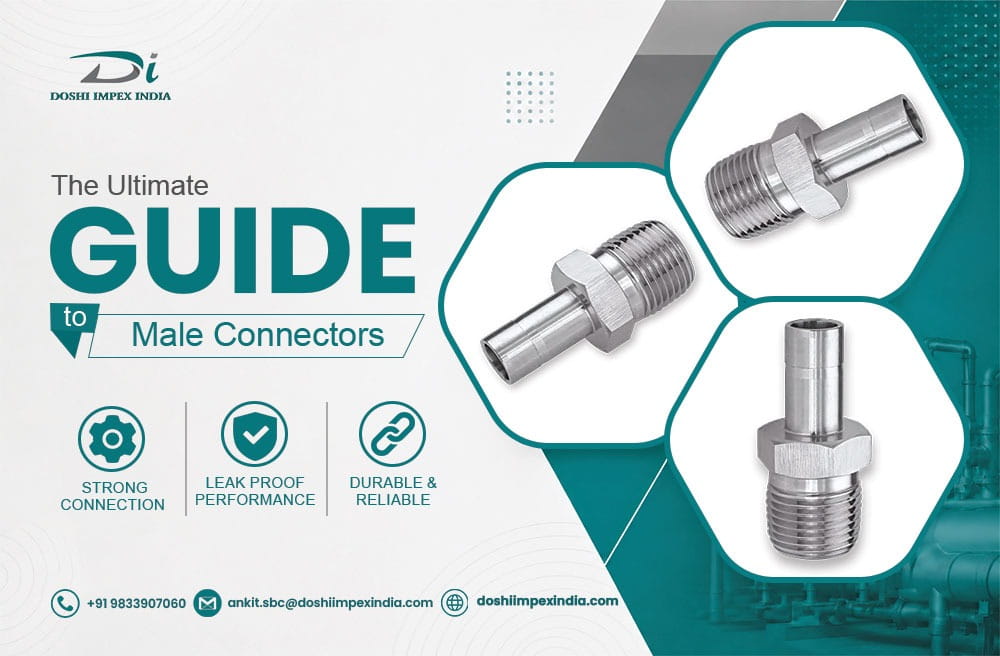
Male connectors are a crucial component that are used in industrial instruments, piping, and electrical, pneumatic, hydraulic, and fluid-handling systems. They are designed to provide solid and secure connections between pipes, tubes, hoses, and other devices and fittings to ensure smooth flow and reduce the chance of leakage. The choice of the correct connector is essential to ensure the performance of your system, as well as safety and longevity.
For industries that require fittings with precision, understanding the various types of fittings, materials, applications, and the criteria for selection will make your purchasing decision more straightforward. This guide will cover all you must know about male connectors as well as their uses and methods of selecting the best product from one of the leading male connectors Manufacturers in India.
What Is a Male Connector?
Male connectors are fittings with threads that are external, or the male end of the connection, which connect to female threaded ports, tube fittings, valves, or other components. It is typically utilized to connect pipe or tubing to equipment and provide an insecure transition between various components.
Male Connectors Female Connector can be made from materials like carbon steel, stainless steel, brass, aluminum, or special alloys based on the environment in which it is used. The stainless steel versions are well-suited for industrial applications that require a lot of effort due to their resistance to corrosion and toughness.
Male connectors are available in a variety of dimensions, thread configurations, connector types, and even pressure ratings. They’re appropriate for applications that range from instrumentation systems to industrial process lines.
What Is a Male Tube Connector?
A male Tube Connector is designed specifically for connecting a tube to the female threaded port or to another component. They are used extensively in fluid-control and instrumentation systems where leak-free connections as well as precise tube alignment is crucial.
A standard male tube connector could have tubes at one end, with external threads at the opposite. The design of the connector will determine whether the tube side may use ferrule, compression, or push-in connectors.
Connectors of this type are often used in:
- Systems for instrumentation
- Hydraulic equipment
- Pneumatic systems
- Chemical processing plants
- Installations for oil and gas
- Equipment for pharmaceuticals
- Systems for water treatment
- Process control software
Understanding Male Connector Fitting Designs
A male connector fitting can be made in a variety of configurations to meet different requirements for installation. The proper design is based on the tube’s dimensions as well as thread standards and pressure, temperature, and the material being transported.
Common variations are:
1. Straight Male Connectors:
Straight connectors allow the direct connection between the tubing and the threaded port. They work best when the connection between the equipment and tube is in the same direction.
2. Male Elbow Connectors
Male elbow connectors permit tubing to be redirected while connected to a female threaded port. Common configurations include 45-degree or 90-degree designs.
3. Male Branch Connectors:
These fittings are utilized when tubing lines need to connect to a different branch of a pipe or instrumentation system.
4. Bulkhead Male Connectors
Bulkhead designs are ideal when tubing has to pass through an enclosure, panel, or wall and still maintain a secure connection.
5. Reducing Male Connectors
Reduced connectors permit connections between components of different port or tube sizes, which allows for modular system configurations.
Male Connector vs Female Connector
The distinction between male and female connectors is crucial when choosing fittings.
A male connector typically has external threads. A female connector typically has internal threads. Both components are made to connect and form an extremely secure threaded connection.
For instance, the male connector could connect the valve to a tube that has a female threaded connector. It is vital to ensure that the threads are compatible, as different standards can feature different profiles for threads, pitches, and sizes.
Before purchasing a connector, ensure that the connector makes use of NPT, BSP, metric, or a different thread common to all connectors.
What About Male Connector Electrical Applications?
The term electrical male connector typically refers to connectors that are used to connect electrical circuits in which one side is made up of male pins, terminals, or contacts. While female electrical connectors differ from tube fittings used in industrial applications, the principle is the same: the male component is paired with the female component that is a corresponding male.
Connectors for electrical males are often utilized in:
- Control panels
- Industrial automation
- Sensors
- Instrumentation
- Electrical equipment
- Communication and data systems
- Machinery
When choosing the electrical male connector, considerations such as the voltage as well as current rating, number of pins and insulation materials, environmental protection, and the connection method must be considered.
It is essential not to mix male electrical connectors with female tube fittings. Their design and requirements for performance differ, even though they use the same terms.
Materials Used for Male Connectors:
The material used in a connector directly influences the life of the connector and its performance. The most common materials are:
Stainless Steel: Male connectors made of stainless steel offer superior corrosion resistance, strength, and longevity. They are used extensively for chemical and petrochemical food processing, pharmaceuticals, and instruments.
Brass: The brass connectors offer excellent machinability and resistance to corrosion and are frequently employed in general-purpose and pneumatic applications.
Carbon Steel: Carbon steel is able to offer high mechanical strength and is ideal for use in applications in which corrosion protection is properly controlled.
Special Alloys: Nickel alloys as well as other special-purpose materials are suited for high-temperature, highly corrosive or harsh industrial settings.
Key Benefits of Male Connectors:
Male connectors provide several important advantages:
- Secure and reliable connections
- Simple installation and maintenance
- Sizes available in various sizes
- Integrity with different tubing systems
- A good pressure-handling capacity
- Material options that resist corrosion
- Small designs to fit into small spaces
- It is suitable for industrial and instrumentation applications
The use of the right connector could aid in reducing leakage, cut down on maintenance, and increase the overall performance of an instrumentation or fluid system.
How to Select the Right Male Connector?
Selecting the right Female Connector is a matter of evaluating various technical aspects.
First, identify the needed size of pipe or tube. Next, determine the type of thread and make sure to ensure the compatibility of the mating component. Temperature and operating pressure should be considered as well.
The choice of material should be made in accordance with the gas, fluid conditions, environment, and requirements for corrosion. In harsh industrial environments, stainless steel or specially formulated alloys could provide superior long-term performance.
It is also essential to verify the relevant industry standards, dimension requirements, connector type, and pressure ratings before making a purchase.
Applications of Male Connectors:
Male connectors are employed in many industries. Instrumentation applications depend on precise fittings to connect gauges, valves, transmitters, and tubing. Pneumatic and hydraulic systems utilize connectors to ensure solid connections to air and fluid.
Other areas of application include chemical processing as well as oil and gas energy generation, water processing, manufacturing machines, pharmaceutical plants, along with industrial automation.
For electrical use, specially made electrical connectors with a male design serve to join sensors as well as control systems, cables, and other equipment.
Choose Reliable Male Connectors Manufacturers in India:
Choosing the right products from leading Female Connectors Manufacturers in India can assist businesses in finding fittings made to specifications for dimensional, material, as well as performance requirements. A reliable supplier or manufacturer is able to offer different materials, sizes, as well as connection configurations and thread standards that satisfy specific requirements for the application.
Doshi Impex India offers industrial components and fittings designed for the most demanding applications where precision, reliability, and quality are essential. Buyers must provide full technical specifications when seeking a quote to ensure that the correct connector is used.
Male connectors play a crucial part in making secure connections in instruments, industrial as well as pneumatic, hydraulic and electric systems. From the Tube connector for males to a special fitting for male connectors, the right fitting can increase system reliability, reduce leakage risks, and make maintenance easier.
Before buying, consider the dimensions, material, thread standard, thread size, temperature range, pressure rating, and the application. Working with knowledgeable leading manufacturers of Male Connectors in India can help industries find reliable connectors that are suited to their particular operational requirements.
What is the definition of a male connector?
A male connector is a fitting that has an external threaded male or male connection that is designed to connect to a female-threaded port or other component. It is extensively employed in tubing, piping, as well as instrumentation and industrial systems.
What exactly is the purpose of a Male tube connector?
Male tube connectors can be used for connecting tubing to valves, equipment, instruments, or ports that are female-threaded. It is typically used in pneumatic, hydraulic, instrument, and fluid handling systems.
What is the distinction between male connectors and female connectors?
Male connectors typically have male threads, or external threads, and female connectors include internal threads, or female contacts. They are intended to connect.
- What are the common materials used to make male Connector fitting products?
Connector fitting products are typically constructed using brass, stainless steel, carbon steel, aluminium, and specialty alloys. Material selection is contingent on temperature, pressure, and corrosion, as well as the specifications for the application.
- How can I select the top Female Connectors Manufacturers in India?
Find manufacturers or suppliers that offer appropriate sizes, materials, thread standards, thread pressure ratings, quality control, custom options, and technical assistance. Doshi Impex India can be considered for industrial connectors and fitting specifications.